

Zero Gravity


Parabolic Flight
During a parabolic flight, the aircraft creates weightlessness by flying a specific parabolic trajectory, during which it is in "free fall" for approximately 20 to 22 seconds. During this phase, the aircraft and passengers fall at exactly the same rate due to gravity, resulting in weightlessness for the occupants relative to the cabin. Details on weightlessness during parabolic flight: Physical principle: Weightlessness occurs because the aircraft overcomes air resistance and moves along a parabolic path without propulsion, similar to a thrown ball. Procedure: The aircraft climbs steeply, then throttles back its engines and describes an arc (parabola). During this phase (the "parabola"), passengers and cargo in the aircraft float because they are in free fall. Duration of weightlessness: A single parabola provides approximately 20-22 seconds of weightlessness. State in the aircraft: The aircraft falls "around" the passengers. It is a state in which no external forces (such as the cabin floor) act on the body, which is perceived as weightlessness. Repetition: This maneuver is repeated multiple times (often up to 30 times) to allow for longer research periods in weightlessness. The state corresponds exactly to free fall, since the aircraft is in a powerless state at the top of the turn and follows the acceleration due to gravity without lift or thrust interfering with its trajectory.

Training
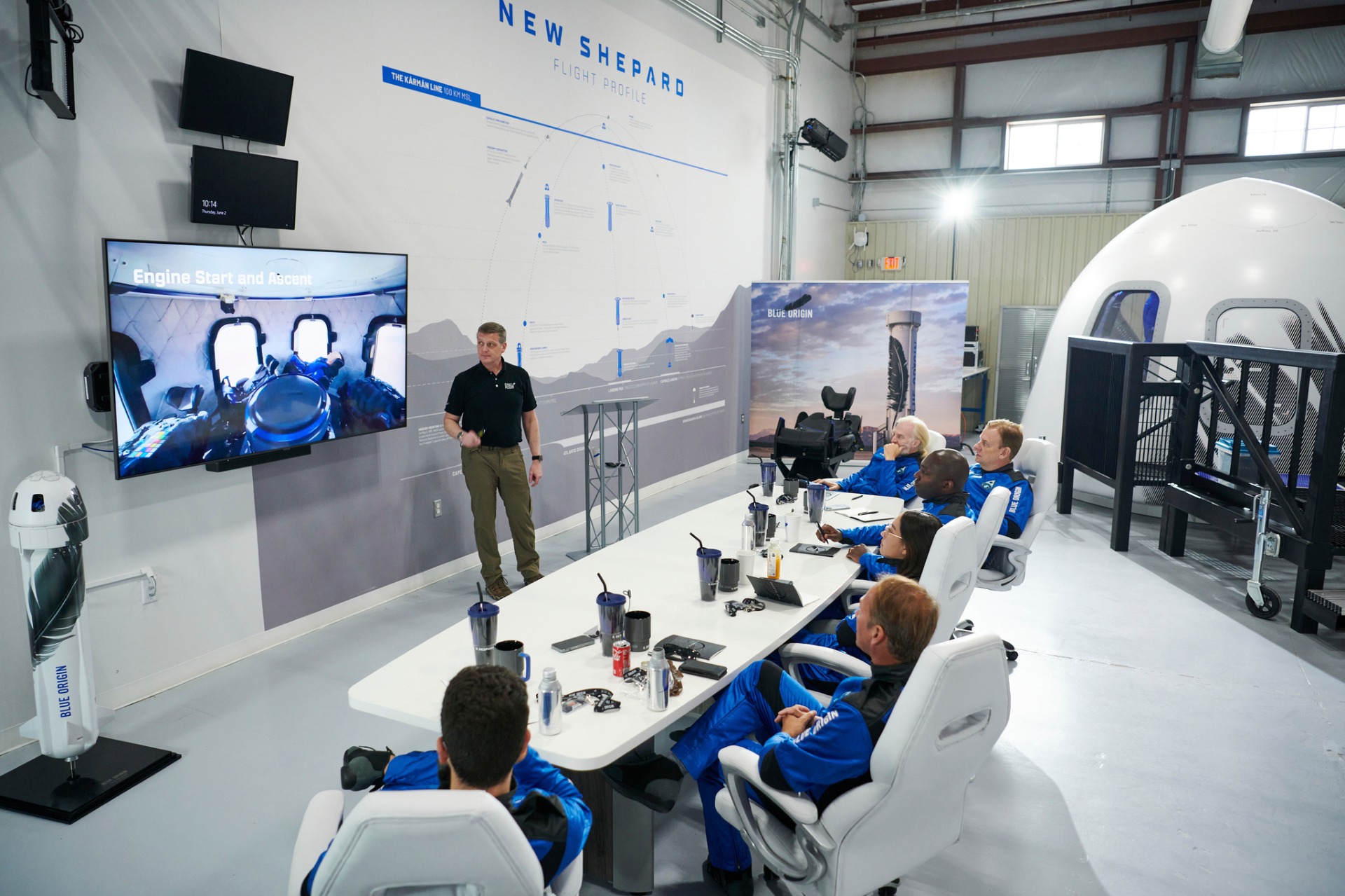
Blue Origin Astronauts Training
Astronaut training at Blue Origin for the New Shepard missions typically lasts two days and is intensive, designed to prepare participants for suborbital flight. It includes theoretical instruction, safety drills (such as quickly donning the five-point harness and maneuvering within the capsule), and simulations in a capsule trainer and on the launch pad to practice all phases of flight, from evacuation to weightlessness, allowing astronauts to focus on acceleration and the view.
Training focuses on: Classroom and theory: Understanding the mission profile, safety systems, and weightlessness. Capsule training: Entry and exit, harness systems (quickly donning and releasing), movement in weightlessness, and emergency procedures.(e.g., fire protection system, masks). Simulations: Practicing launch and landing phases, climbing the launch tower, and responding to various scenarios using the capsule simulator.
Launch pad visit: Tour of the launch site and the rocket. Seat adjustment: Individual seat adjustments to withstand G-forces during emergency ejections. Duration & Scope: Usually 14 hours spread over two days. The focus is on practical skills and emergency management to minimize surprises during the flight. Training objective: The astronauts should feel safe and comfortable so they can fully enjoy weightlessness and the view from space.
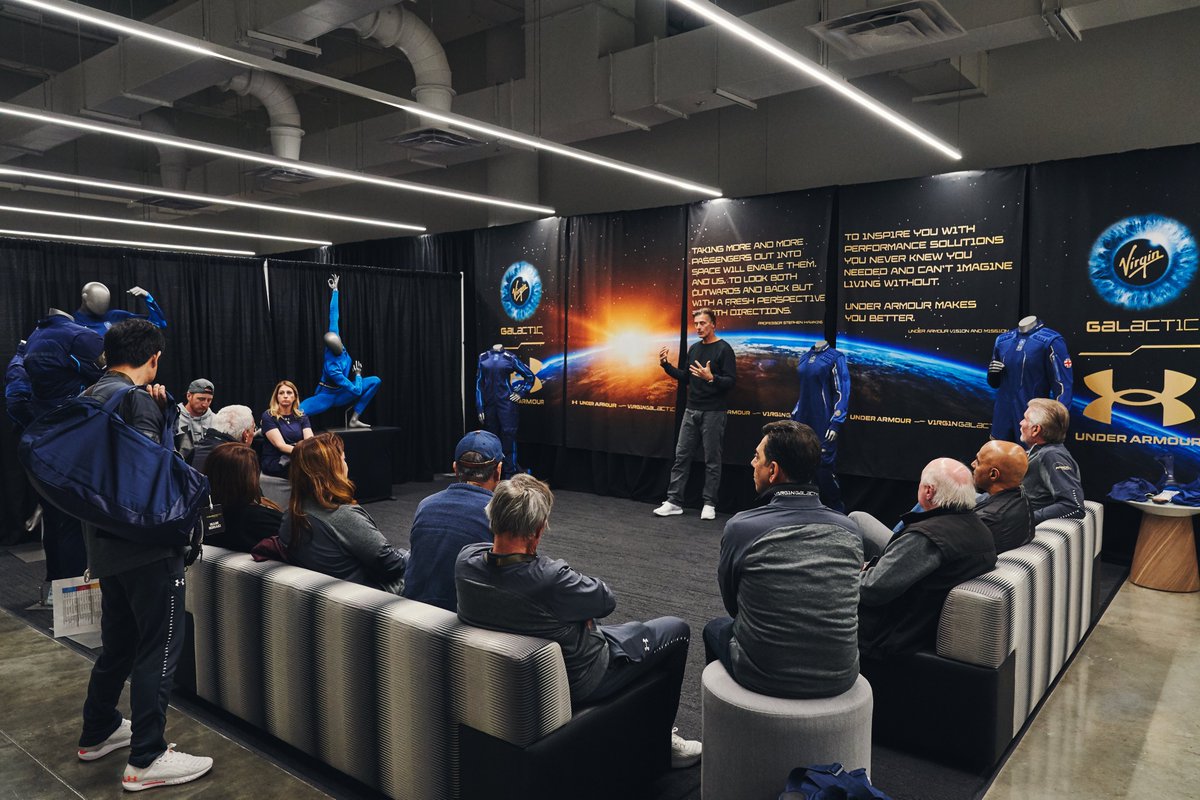
Virgin Galactic Astronauts Training
Virgin Galactic's astronaut training prepares future space tourists for their suborbital journey by helping them become familiar with the aircraft (SpaceShipTwo/VSS Unity), the cabin environment, and G-forces. This training optimizes the experience and ensures they are ready for launch, led by veterans like Chief Astronaut Beth Moses. It includes hands-on exercises, G-force training (often at the Nastar Center), and preparation for weightlessness, all designed to curate the unique "future astronaut" experience. What the training includes: Cabin and systems training: Astronauts learn about the spacecraft and its functions to move safely within the cabin and fully enjoy the experience.
G-force training: Because the flights involve G-forces, training in a centrifuge (such as the Nastar Center) is often conducted to prepare for acceleration and reentry, as reported by NBC News. Weightlessness preparation: Although these are suborbital flights, training to simulate and experience weightlessness is also part of the comprehensive program to prepare passengers. Experience optimization: All training aims to maximize the transformative experience of spaceflight and ensure customers are ready. Who leads the training:
A team of experts, including pilots, engineers, and the medical staff, supports the future astronauts. Beth Moses, one of the first women in space, serves as Chief Astronaut Instructor. Target audience: The preparation is aimed at "Future Astronauts" who join the program through the exclusive Virgin Galactic Future Astronaut Community and embark on a lifelong journey. In summary, Virgin Galactic's training is a mix of practical, experiential sessions designed to prepare customers physically and mentally for their short but transformative journey into space, rather than being a years-long, intensive NASA program.


NASTAR
SPACEFLIGHT
TRAINING Programs
The NASTAR Center offers a wide variety of human spaceflight training options ranging from Orbital and Suborbital spaceflight training programs; to advanced courses which include space physiology, high G loading in multi-axes, high altitude and decompression, and multi-axis accelerations. Each course is offered as an initial training course or a refresher training course. The NASTAR Center is the first FAA-Approved center able to meet Crew Qualification and Training Requirements (14 CFR Part 460.5) (FAA Certificate SA 10-001) for commercial human spaceflight.


Cognitive skills and high speed decition making
Cognitive skills developed by helicopter pilots—specifically in areas like spatial awareness, high-stakes decision-making, and sensorimotor coordination—directly enhance performance in complex, dynamic environments like parkour. Both disciplines require rapid, accurate processing of environmental information and split-second physical adjustments to maintain safety and flow. Here is how specific helicopter pilot cognitive skills translate to parkour:1. Advanced Spatial Orientation and PerceptionHelicopter pilots operate in 3D space, often with degraded visual cues, which develops superior spatial awareness.
Application to Parkour: This translates to better "mapping" of a parkour course, instantly visualizing trajectories, assessing jump distances, and understanding the relationship between body position and complex obstacles.
Survey Strategy: Pilots are adept at "survey strategies" (looking at the big picture rather than just the next step), allowing parkour practitioners to plan multi-stage moves.
2. High-Speed Decision Making (Aeronautical Decision-Making) Pilots must make fast, accurate judgements under high cognitive load.
Application to Parkour: When navigating a course, this skill helps in determining the safest and most efficient path (e.g., choosing to vault vs. climb) instantly, reducing hesitation.
"What Ifs" Scenarios: Pilots are trained to anticipate risks (e.g., weather or mechanical failure). In parkour, this translates to anticipating that a ledge might be slippery or a wall might be loose.
3. Sensitive Controlling and Precision (Sensorimotor Skills)Helicopter pilots manage complex, sensitive controls simultaneously (cyclic, collective, and pedals) to maintain stability.
Application to Parkour: This translates to "sensitive controlling" of body weight and momentum. The ability to make precise, small adjustments in mid-air or during landings (damping) is similar to a pilot's use of Stability Augmentation Systems.
Kinesthetic Memory: The muscle memory developed during manual helicopter control translates to better control over, for example, landing on a narrow rail or executing a precise flip.
4. Rapid Reaction Time and ProcessingPilots must respond instantly to unexpected events, such as turbulence or engine failures.
Application to Parkour: When a move does not go as planned, this cognitive flexibility allows for immediate adaptation (e.g., changing a fall into a roll) rather than freezing.
5. Memory-Related Functions and Situational AwarenessPilots use their working memory to monitor multiple systems and maintain "situational awareness"—understanding what is happening around them and predicting what will happen next.
Application to Parkour: This improves the ability to remember complex, multi-step, or long-sequence routines (memory) and to maintain awareness of surrounding obstacles or moving objects (situational awareness).
In summary, the cognitive load involved in maneuvering a helicopter in a "degraded visual environment" is directly comparable to a parkour athlete managing a complex, fast-moving, and high-risk obstacle cours.

Positive G-Force Training

Tremendous Alpine Jet Flight near Munich
Starting from Bavaria – about 30 min from Munich – you can experience the Aermacchi S.211 in an action-packed jet flight in the stunningly beautiful Alps of South Germany. Thanks to access to a military training area, you can experience not only breakneck aerobatics and military maneuvers but also low-level flying in the incredible mountain landscape of the South German Alps. Visualize you flying through a narrow valley at a high speed and low altitude. It simply doesn't get better than that. Actually, it does, the pilot has a few more aces up his sleeves. For example a giant loop with 8000ft circumference. You will feel the G's there! You will be equipped with a full Airforce-Setup, flight suit, survival vest, Anti-G-pants, Helmet with Oxygen-Mask.

Fly a supersonic Starfighter
Nicknamed "The Missile with a Man in it" thanks to its radical design, you will be flying a real legend. Brigadier General Chuck Yeager – the first human to break the sound barrier and a legend himself – famously displayed a record-breaking ascent in a rocket-assisted F-104, climbing to the Edge of Space at more than 118,000 feet (34km). The Lockheed F-104 Starfighter has an extremely radical, very fascinating design. Its sharp-as-a-dagger, razor-thin, tiny wings are attached to the very lean, cigarette-shaped fuselage very far in the back. Being the first production aircraft to fly at Mach 2, the Starfighter was also the first to hold airspeed, altitude, and time-to-climb records simultaneously.
Zero Gravity Training
Bordeaux France 17. October 2026
Commercial flights for public passengers
Novespace created Air Zero G in 2012 to share the experience of weightlessness with 40 public passengers per flight, using the same A310 ZERO-G as for scientific experiences.[12] These flights are sold by Avico, are mainly operated from Bordeaux-Merignac, France, and intend to promote European space research, allowing public passengers to feel weightlessness. Jean-François Clervoy, Chairman of Novespace and ESA astronaut, flies with these one-day astronauts on board A310 Zero-G. After the flight, he explains the quest of space and talks about the 3 space travels he did along his career. The aircraft has also been used for cinema purposes, with Tom Cruise and Annabelle Wallis for the Mummy in 2017.


Advanced Aerobatic PC7
PC7 is an ideal aircraft for learning Aerobatic flying, military flight maneuvers and has won over many countries for both its reliability and performance. In April 2025 both Commander execute aerobatic training in Lausanne Swiss. Advanced Aerobatic training following next until 2028.


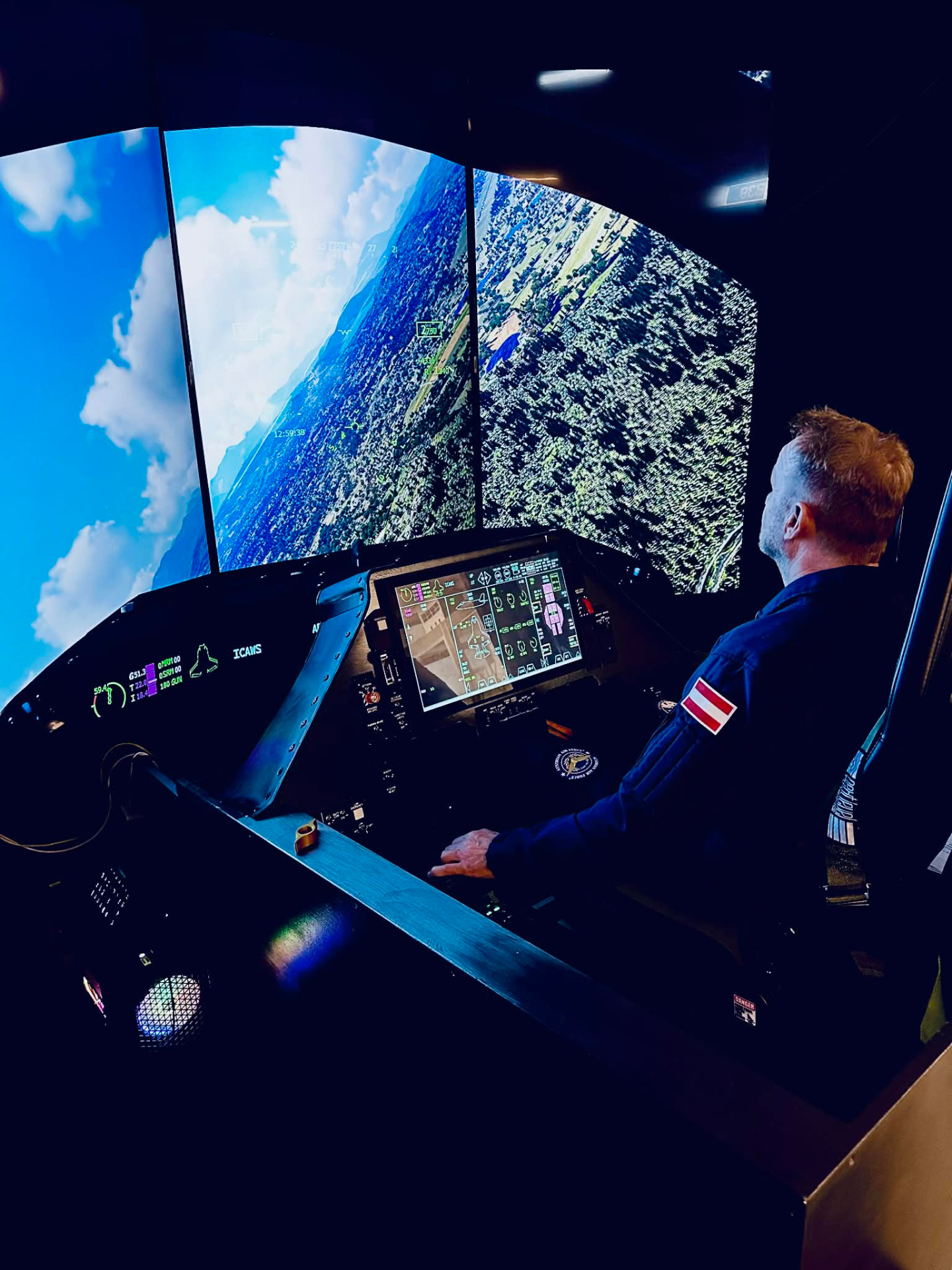
Simulator Trainings Center Zürich
At the Zurich Simulator Center, our cooperation partner, we will be completing several simulator hours together with Boris Otter over the coming years. We will be flying aircraft including the F-18, F-35, Boeing, and Space Simulator. The training objective is the rapid acquisition of information and its effective application. No type rating will be obtained.
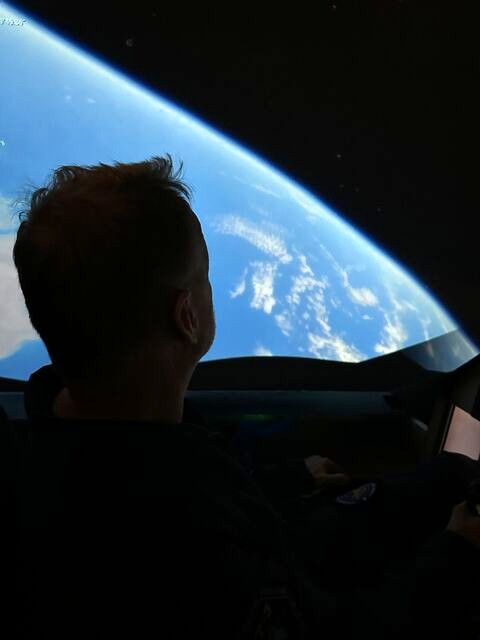

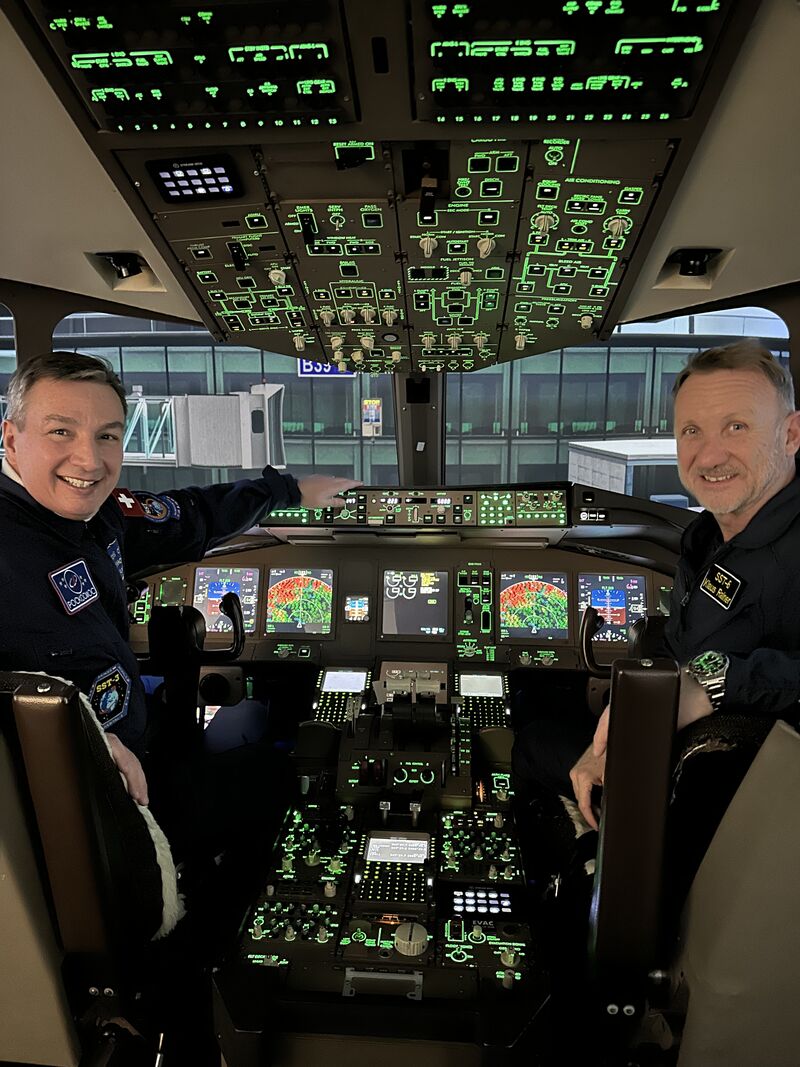
Fly and Race Simulator Zürich Swiss
Boris Otter Instructor
Klaus Rainer future Instructor
You want to fly, contact us to connect with Fly and Race Simulation Center Zürich / Swiss

MIG FLIGHT
Picture yourself in the cockpit.Hear the engines. Feel the power. See the world from above.Now stop imagining and start flying. Book your jet flight experience now#JetFlightExperience #FlyMiGFlug #AviationAdventure