


Earthview

Earthview - the Overview Effect
The effect on astronauts viewing Earth from space is called the Overview Effect, a cognitive shift that can lead to a profound sense of awe, a deeper appreciation for the planet's fragility, and a feeling of interconnectedness with all of humanity. This transformative experience can alter their perspective, leading to a more holistic view of the world without man-made borders and a sense of planetary responsibility. Emotional and psychological effects
Awe and wonder: Astronauts report being overwhelmed by the beauty of Earth, describing it as a "living, breathing organism".
Sense of fragility: Seeing the planet as a "fragile blue marble" floating in space can create a powerful realization of how delicate life is and how thin the atmosphere is.
Connection to humanity: The lack of visible borders in space can foster a strong sense of unity and shared identity, leading to a feeling that all people are part of one human family.
Shift in perspective: The experience can lead to a change in their value system, a greater sense of planetary stewardship, and a more hopeful worldview.
Cognitive and philosophical effects
Interconnectedness: Many astronauts describe seeing the interconnectedness of everything on Earth, from weather patterns to the molecules that make up their own bodies and the spacecraft.
Appreciation for Earth: The view can evoke a newfound and fierce sense of belonging and a deep appreciation for Earth as our only home and life support system.
Realization of shared problems: Observing environmental issues like deforestation, pollution, or the impact of natural disasters from space can highlight that these problems affect everyone on a global scal

The Overview Effect describes the phenomenon experienced by astronauts when they first see planet Earth from space. The term was coined by Frank White's 1987 book of the same name. The Overview Effect is described as an experience that changes one's perspective on planet Earth and humanity. Key characteristics include a sense of awe, a profound understanding of the interconnectedness of all life on Earth, and a renewed sense of responsibility for our environment.
NASA astronaut Ron Garan spent 178 days on the International Space Station (ISS), orbiting the Earth nearly 3,000 times. Looking out the window, he says he realized just how fragile the foundations of life on our planet—the atmosphere, oceans, and ecosystems—are. He realized, according to the Daily Mail, that "humanity is living a lie."
This perspective showed him that many of the systems humanity relies on are based on a false premise: that Earth's natural resources are merely a byproduct of economic growth, Garan explained.
NASA astronaut warns: Don't treat nature like a "subsidiary" of the economy.
Garan described how, while he couldn't see the economy from space, he could see the consequences of thinking that treats nature like a "subsidiary" of the economy. From this perspective, he realized that our priorities are fundamentally wrong.
Instead of thinking in the order of economy, society, planet, we should start with planet, society, economy in order to meaningfully shape our future development, Galan said, according to the "Daily Mail".
Real time tracking of satellites in Earth´s orbit - SatelliteMap - Space
Currently (as of late 2024/early 2025), over 10,000 active satellites are orbiting the Earth, with the number increasing rapidly, led by SpaceX's Starlink satellites. In addition to the active satellites, there are tens of thousands of larger pieces of debris and millions of smaller objects (space junk) in orbit, posing a growing threat.
Current figures: Active satellites: Over 10,000, with around 12,000 expected by late 2024/early 2025. Ownership: Over two-thirds of all active satellites belong to SpaceX. Space junk
(by size): 10 cm: approx. 36,500 tracked objects.
1 cm: approx. 1 million objects.
1 mm: approx. 170 million objects.
Satellite Launches
ISS International Space Station
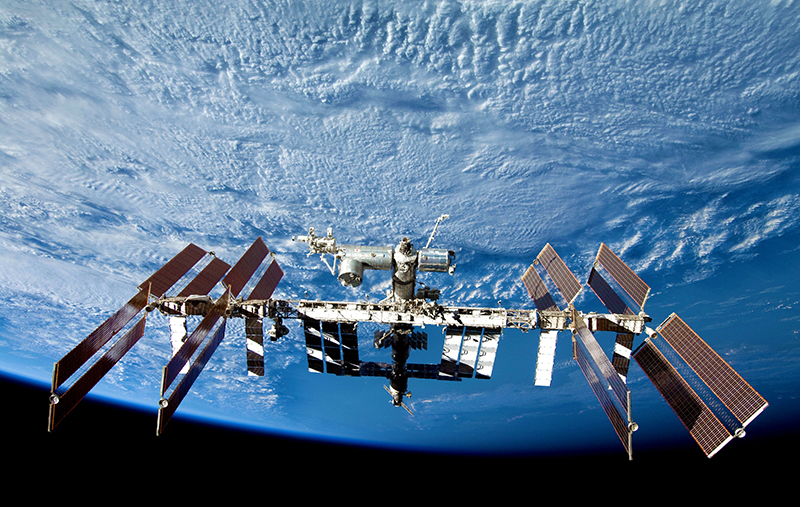
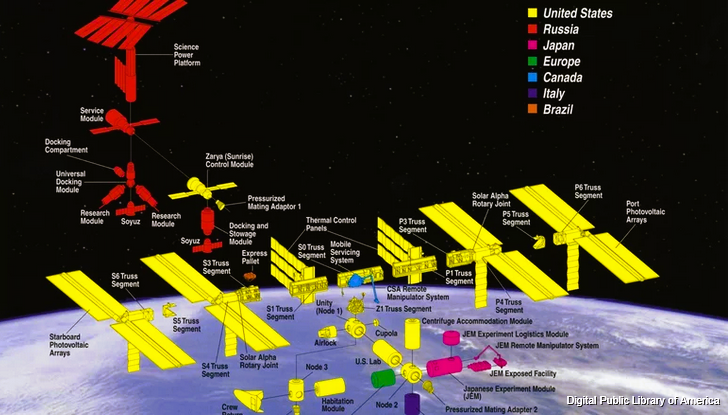
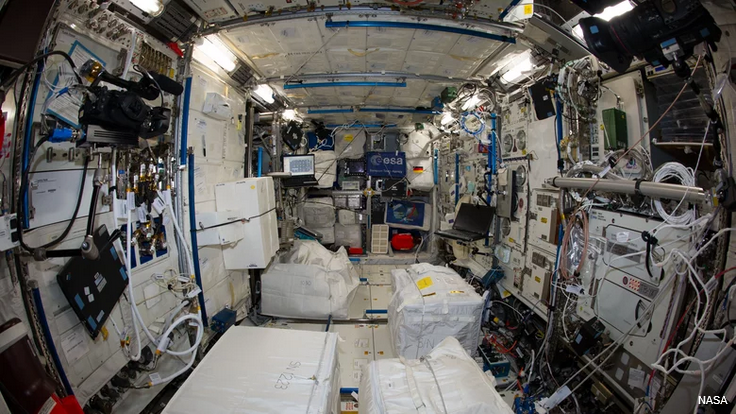
The International Space Station (ISS) is a massive, orbiting laboratory, the size of a football field, that hosts international crews for scientific research, orbiting Earth every 90 minutes while traveling at 17,500 mph, experiencing 16 sunrises/sunsets daily, and requiring astronauts to exercise daily to combat microgravity's effects. It's a huge international collaboration (NASA, Roscosmos, JAXA, ESA, CSA) and the most expensive single structure ever built, with living space comparable to a six-bedroom house and advanced life support, including water recycling. Size & Structure
Dimensions: About the size of a football field (357 feet long) with a mass of nearly a million pounds (420 tonnes).
Volume: Has 13,000+ cubic feet of pressurized volume, comparable to a Boeing 747 or a six-bedroom house, with labs, sleeping quarters, and two bathrooms.
Components: Features large solar arrays (as big as eight basketball courts) that rotate to track the sun for power.
Speed: Travels at about 17,500 mph (28,000 km/h).
Orbits: Completes 16 orbits around Earth every 24 hours, seeing 16 sunrises and 16 sunsets.
Crew: A rotating crew of up to 10 people from different nations live and work on board.
Research: Functions as a microgravity lab for science in physics, biology, astronomy, and more.
Health: Astronauts exercise at least two hours daily to prevent muscle and bone loss.
Logistics: Requires regular resupply missions for food, water, and equipment, with systems for recycling air and water.
Partners: A joint project involving NASA (US), Roscosmos (Russia), JAXA (Japan), ESA (Europe), and CSA (Canada).
Cost: Estimated at over $150 billion, making it the most expensive single object ever built by humans, notes The New York Times


PANOMAX
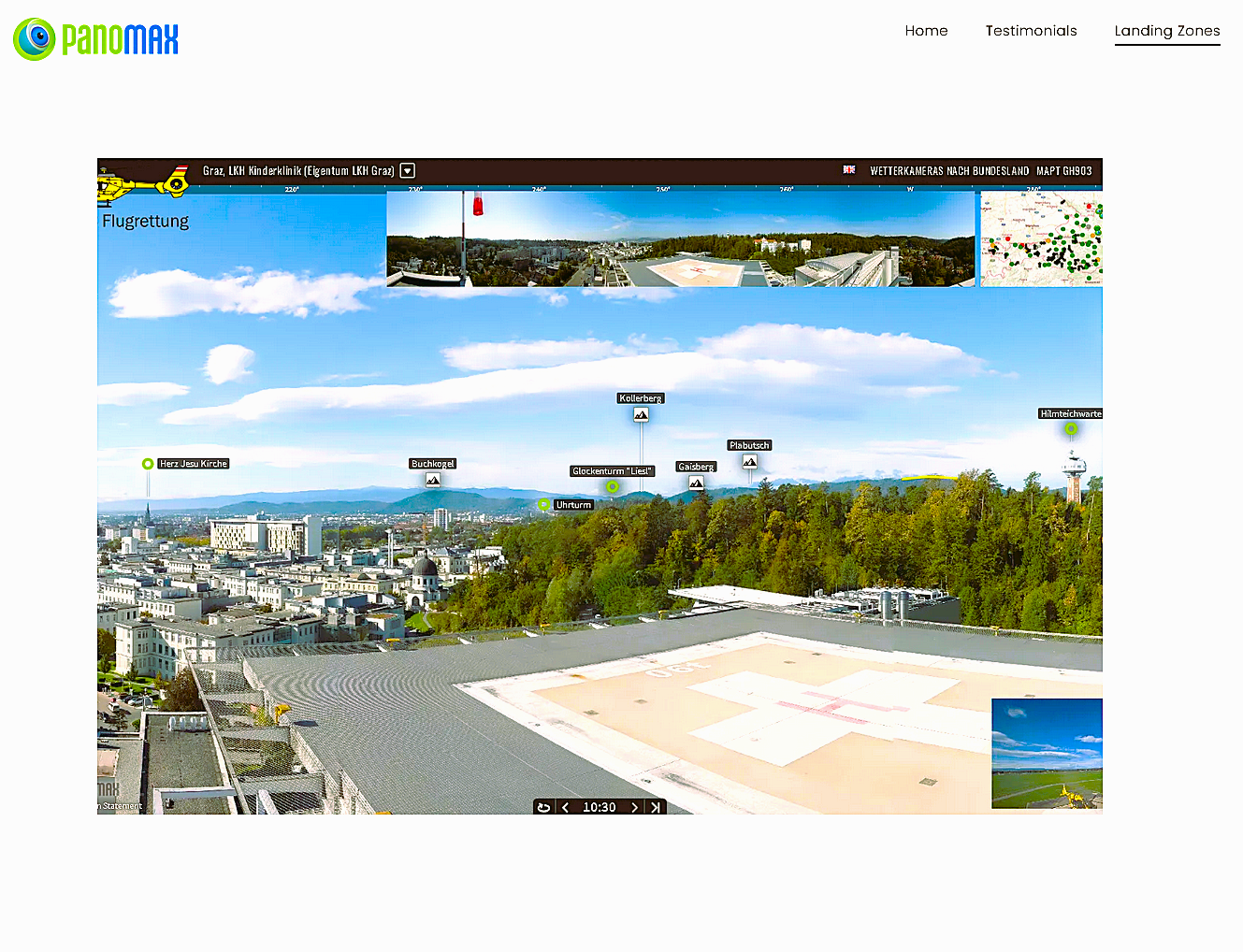
For HEMS operators, ensuring swift, safe, and coordinated helicopter landings is essential. Panomax's 24/7 interactive webcam technology provides real-time, high-definition visual monitoring, offering HEMS pilots precise data on landing conditions even in challenging weather. With remote control features, operators can pan, zoom, and capture essential information, enhancing situational awareness and decision-making. This tool not only optimizes response times but also strengthens coordination between dispatch, pilots, and ground teams—making every operation safer and more efficient.

Join a new Generation of Astronauts
Return to Earth, Forever Changed
New Shepard astronauts ascend toward space at more than three times the speed of sound. They pass the Kármán line, the internationally recognized boundary of space 62 miles (100 km) above Earth, before unbuckling to float weightless and gaze at our planet. The crew returns gently under parachutes, forever changed.